

Thermal disinfection is a process in which microorganisms in the water supply system are eliminated using increased water temperature – especially bacteria of the genus Legionella.
It involves targeted overheating of water to a disinfection temperature, thereby destroying pathogens present in pipes, showers, faucets, or tanks.
This procedure is often used as part of prevention, but also as a reactive measure in case of confirmed contamination.
Why is this important for Legionella?
Legionella survive and multiply in warm water. Their growth is promoted by:
- water stagnation in pipes,
- temperatures between 25–45 °C,
- presence of biofilm and deposits in pipes.
If the water temperature in the system does not drop below the survival threshold of these bacteria (above 50 °C) for an extended period, the risk of their occurrence significantly decreases. Temperatures above 70 °C reliably destroy them.
How does
thermal disinfection work
Increase in
water temperature
The water heating system (boiler, storage tank, heat exchanger station) is set to a minimum temperature of 70–75 °C.
Targeted
pipe overheating
Hot water is discharged through all terminal devices (faucets, showers, valves) to flush the entire distribution system with hot water.
Exposure
time
Each device should be exposed to hot water for at least 3 to 5 minutes, with a recommendation to focus on high-risk areas (dead legs, rarely used locations).
Recording
and verification
Temperatures and overheating times are recorded, thereby creating proof of effective disinfection (e.g., for health authorities).
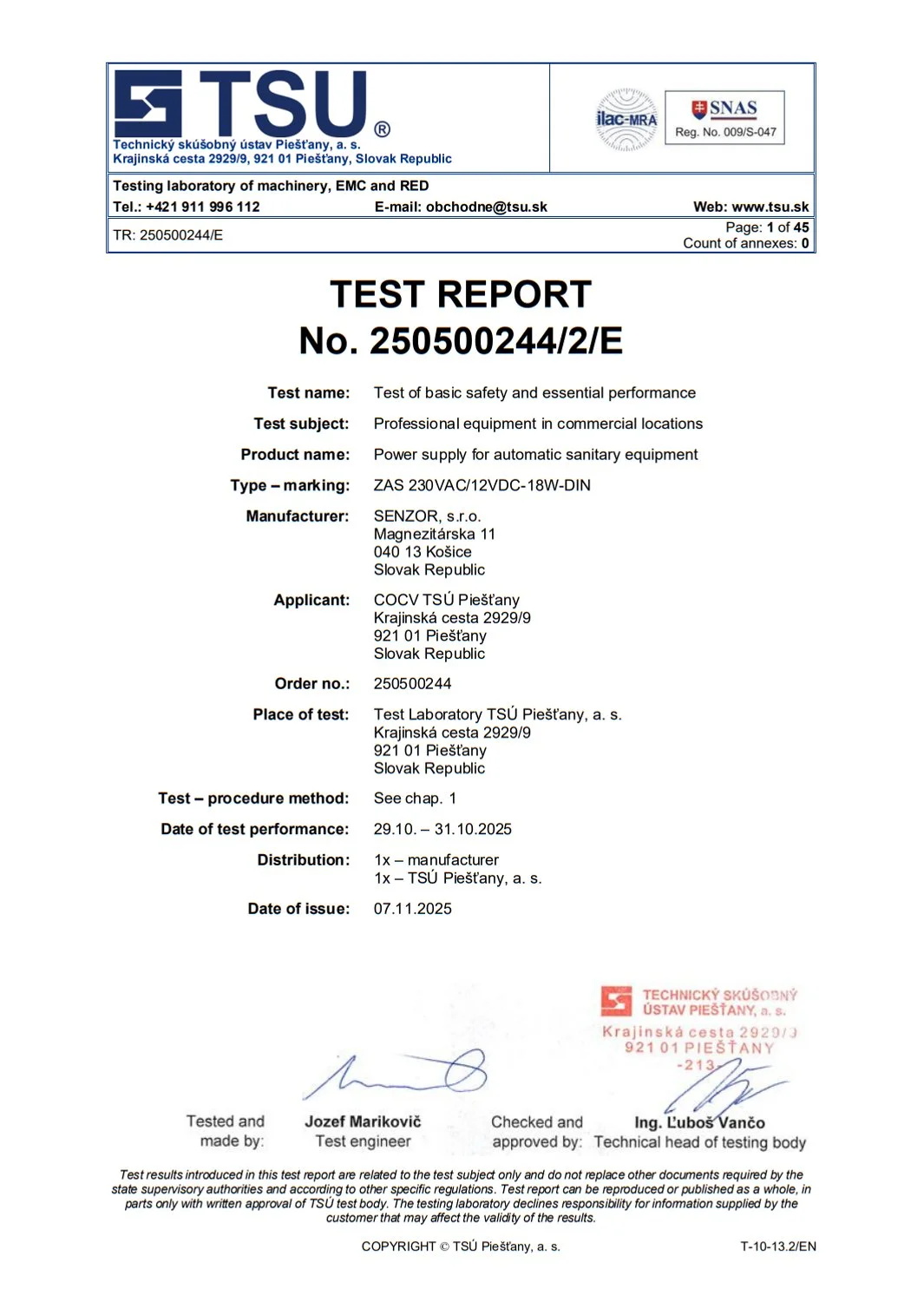
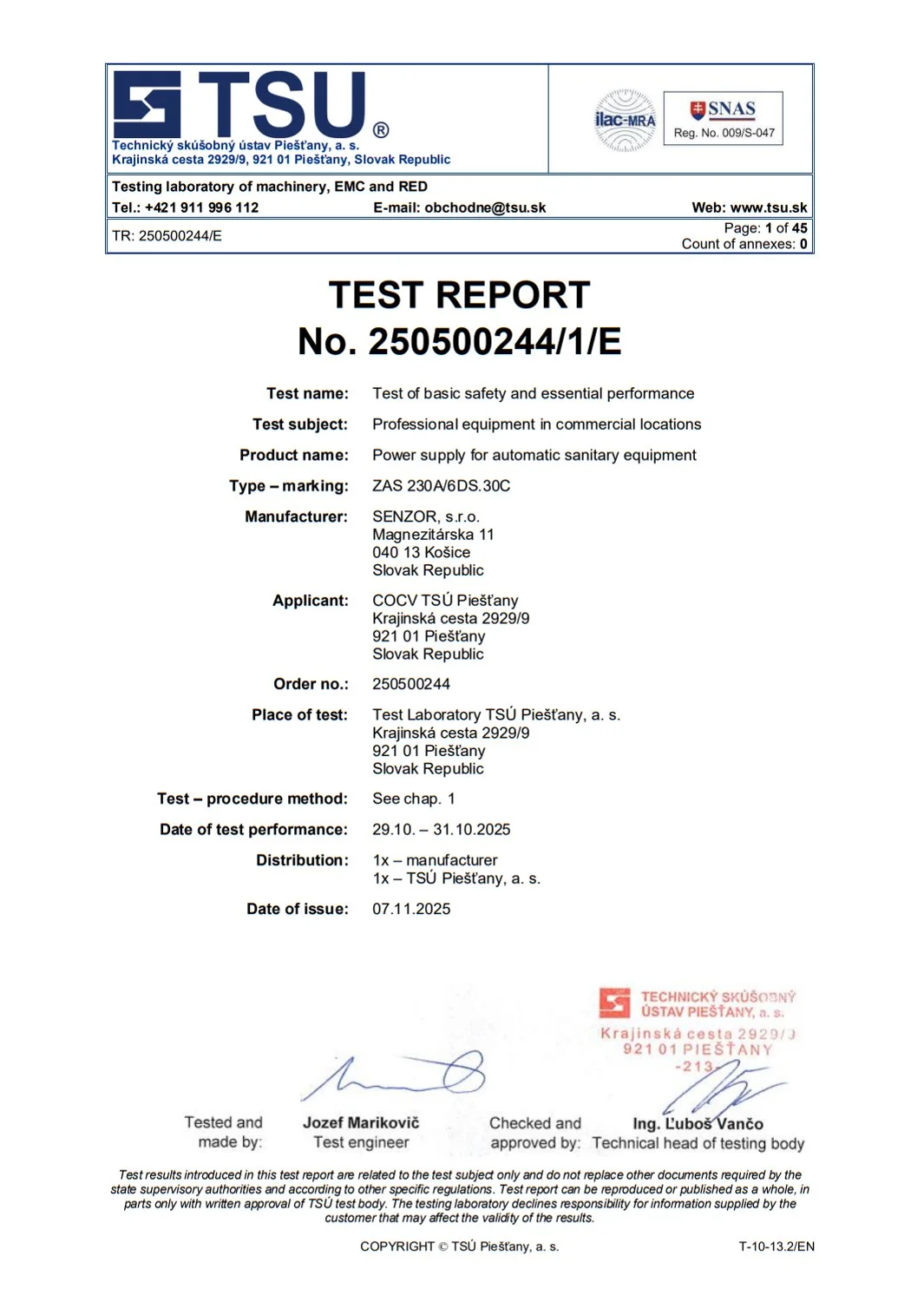
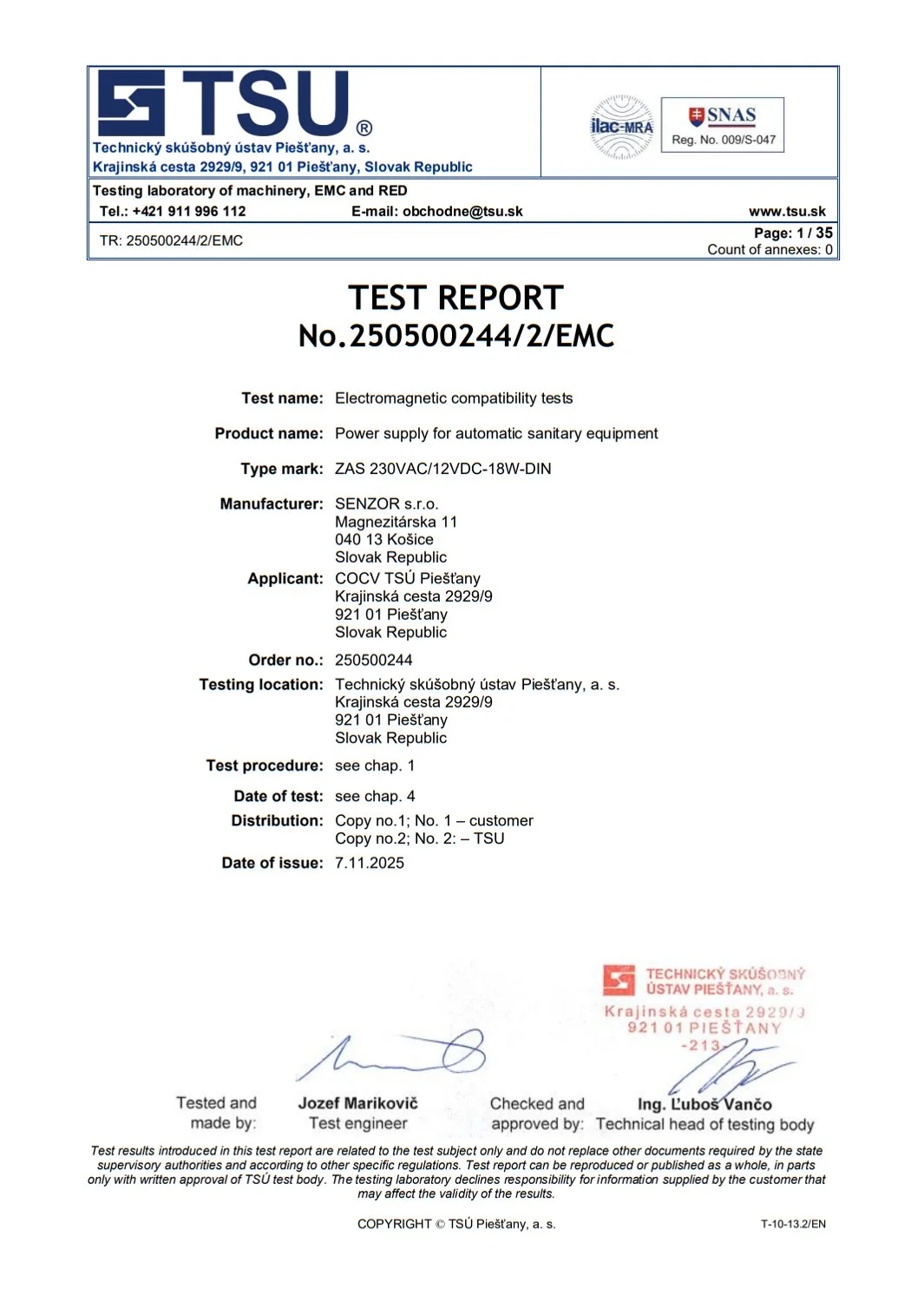
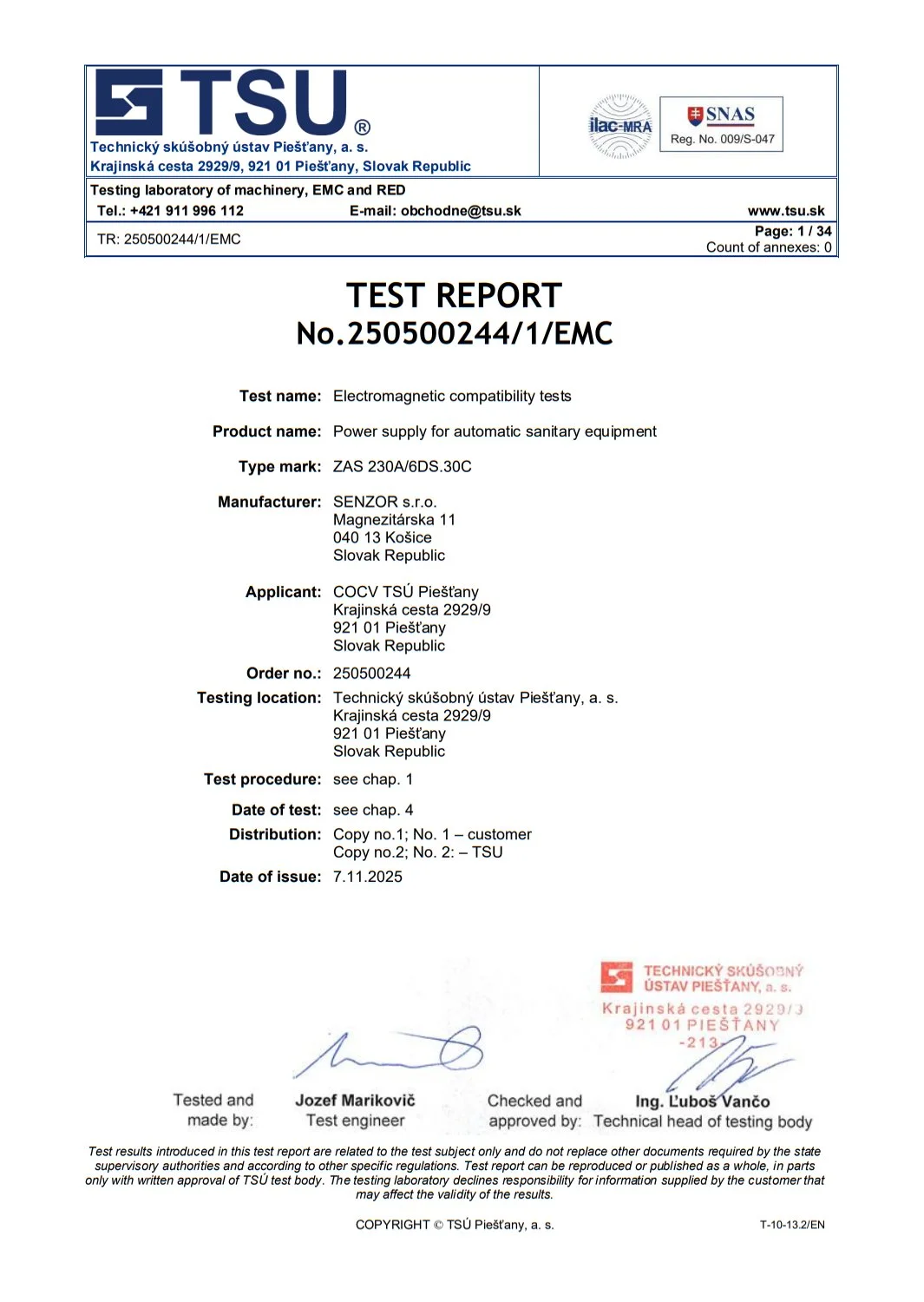
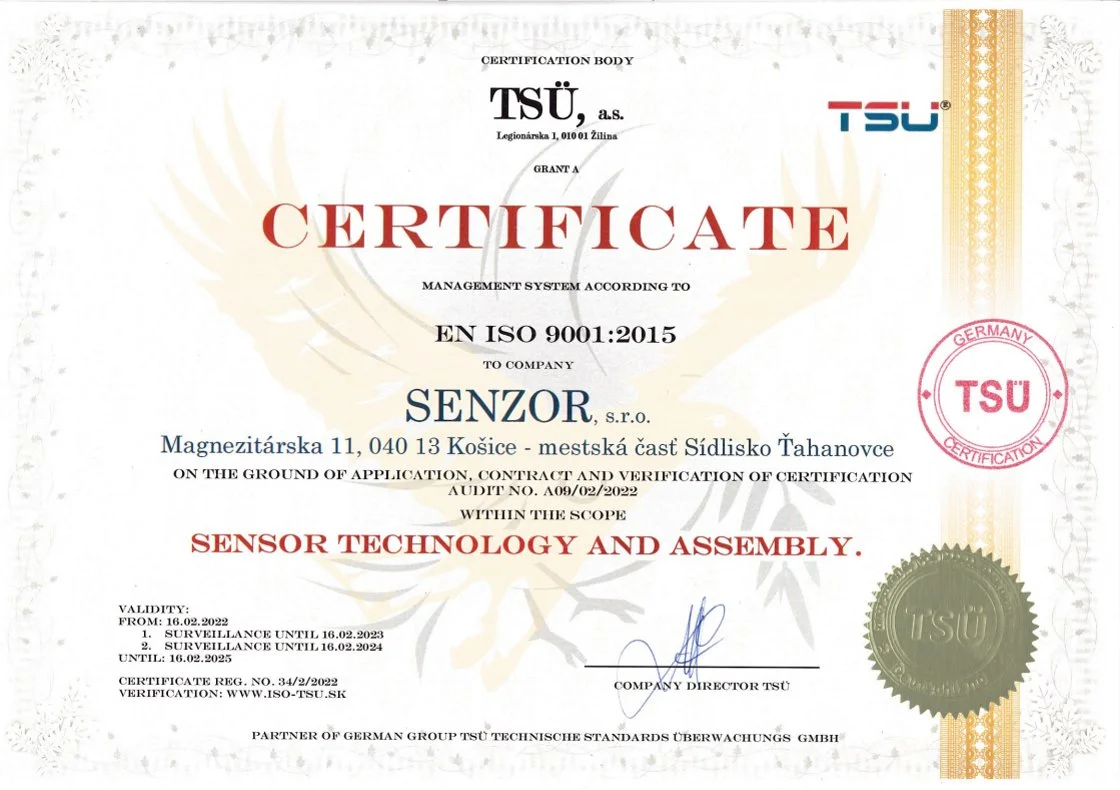
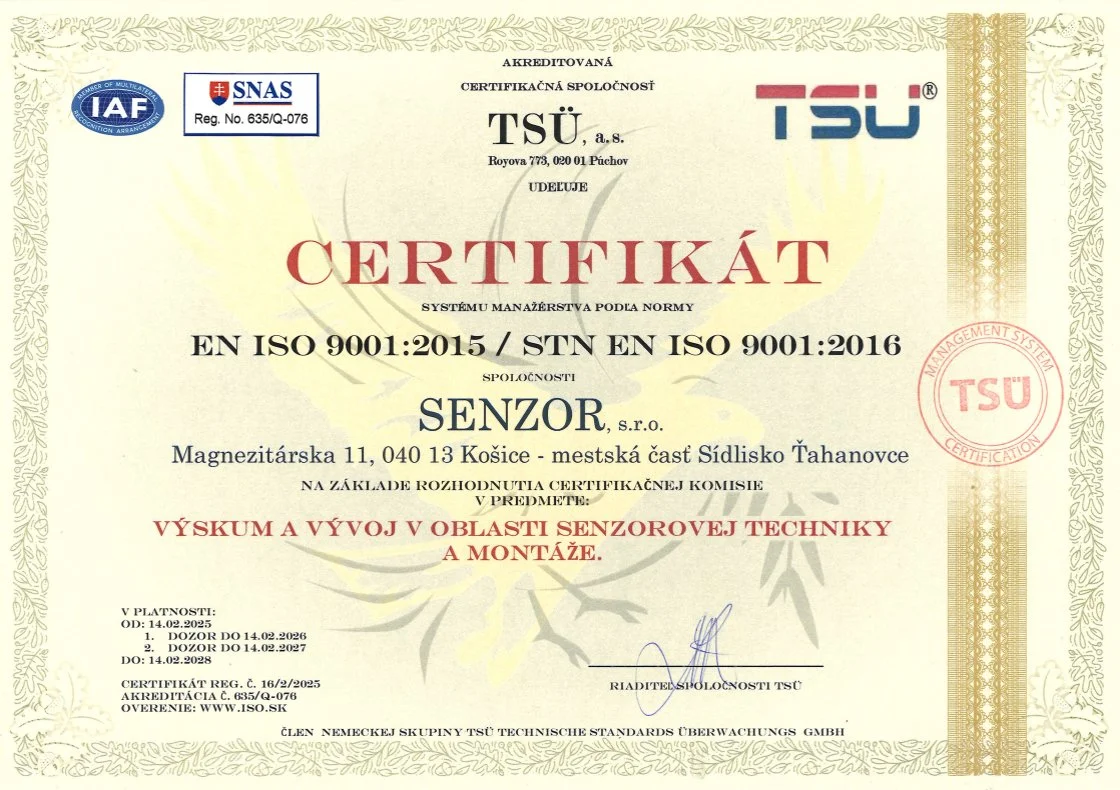
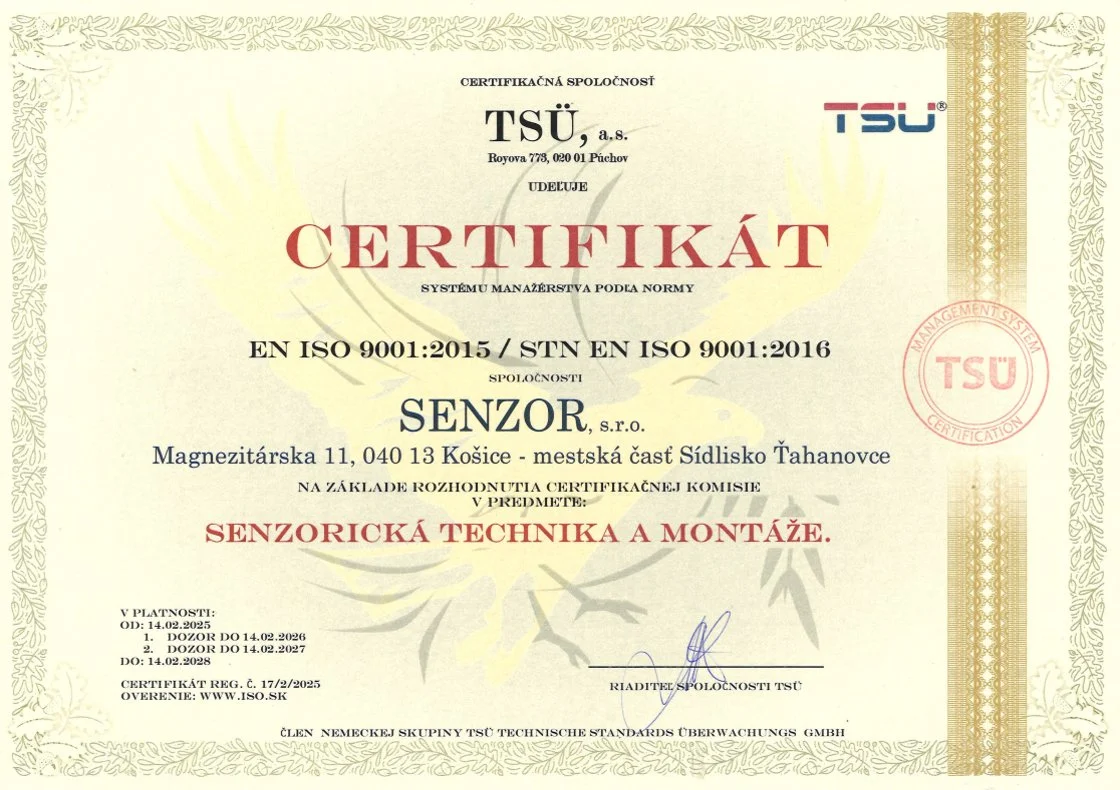
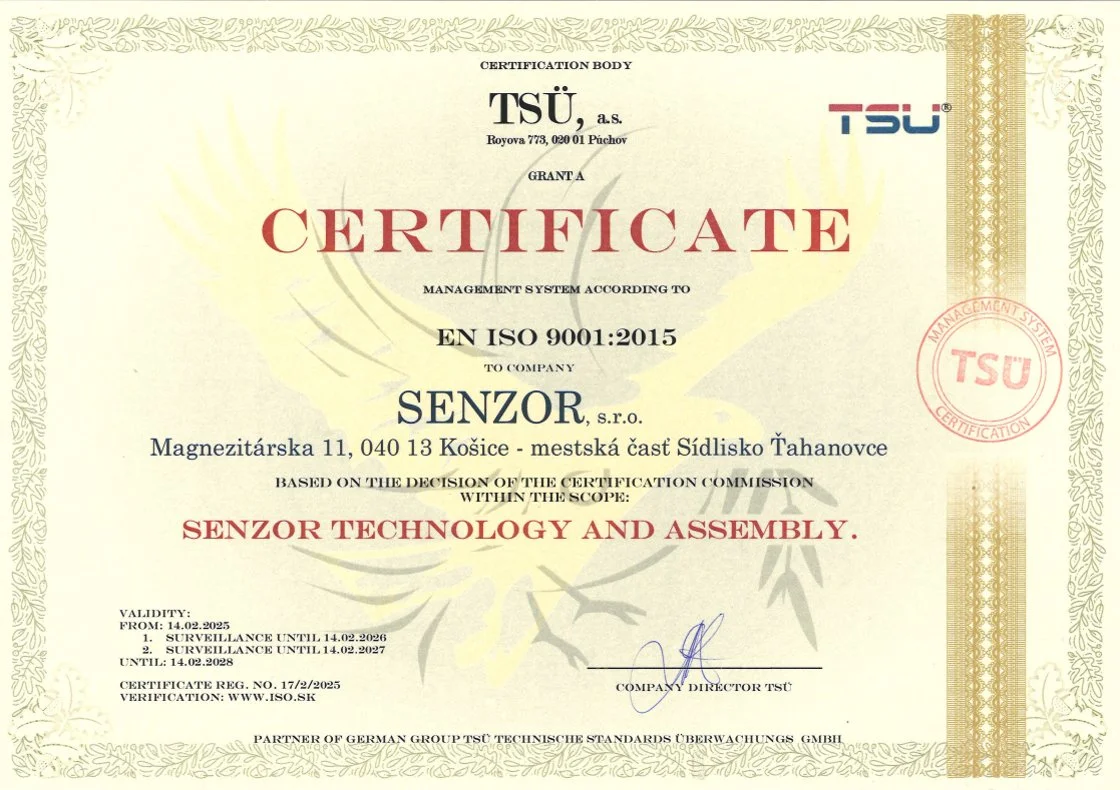
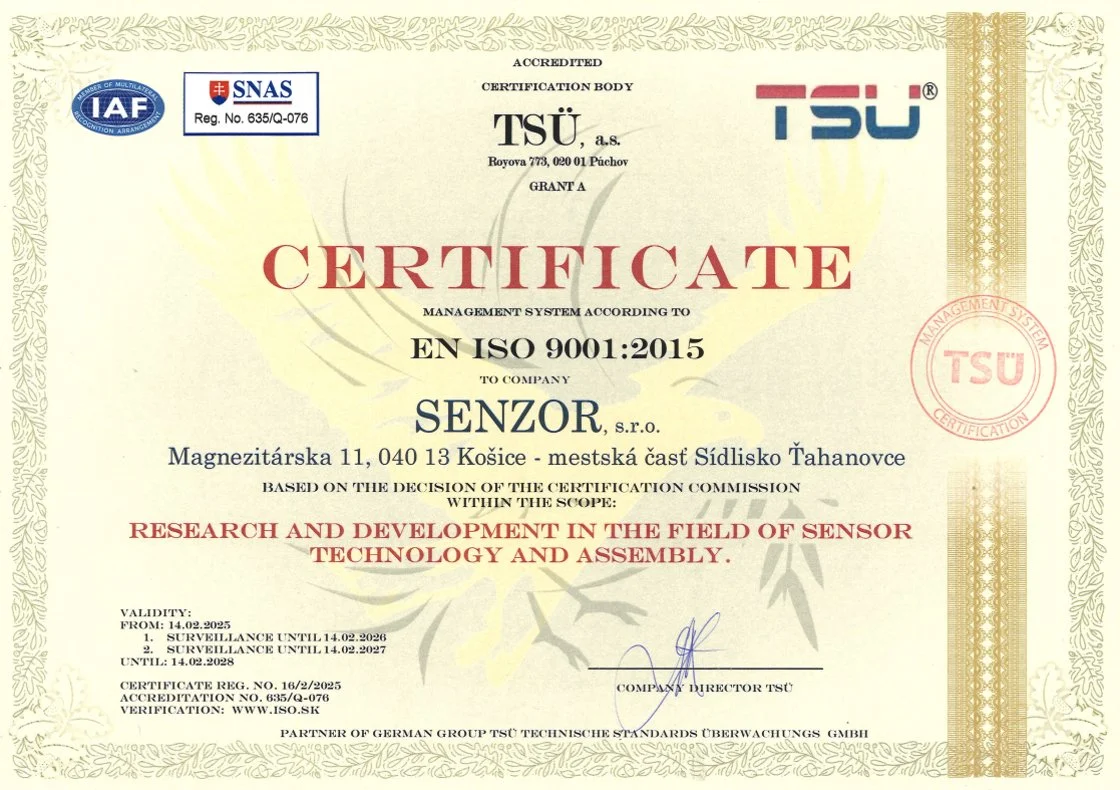
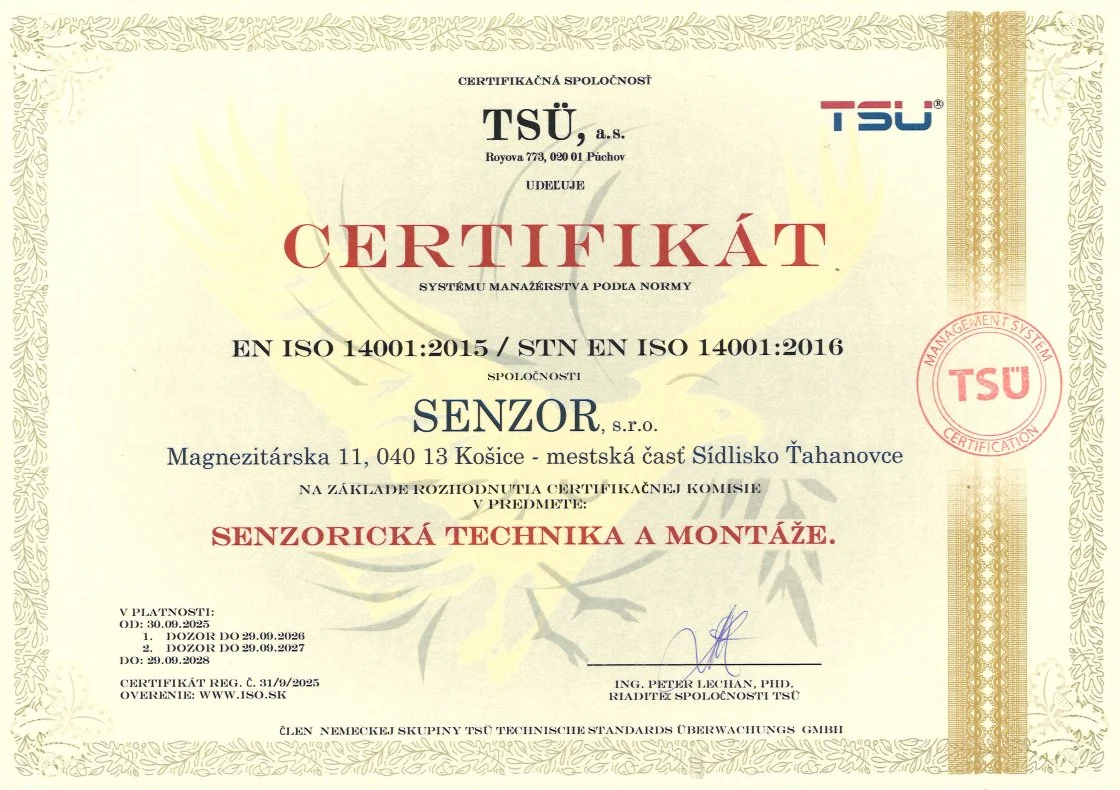
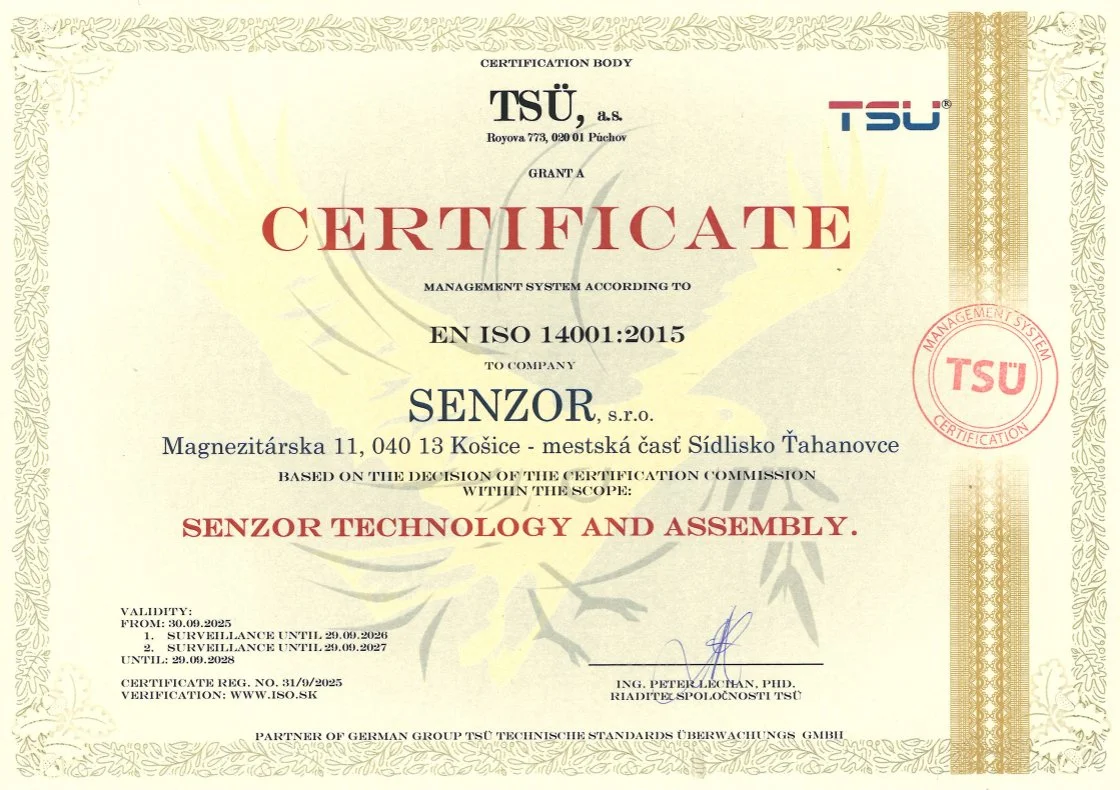
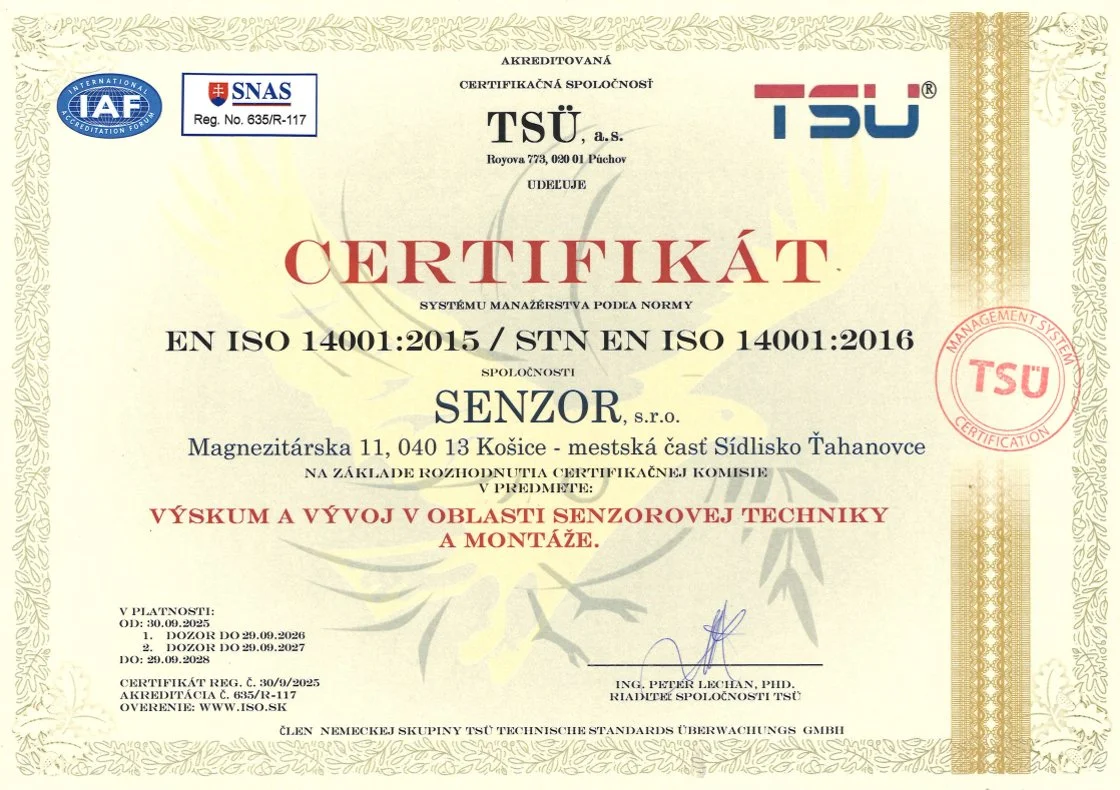
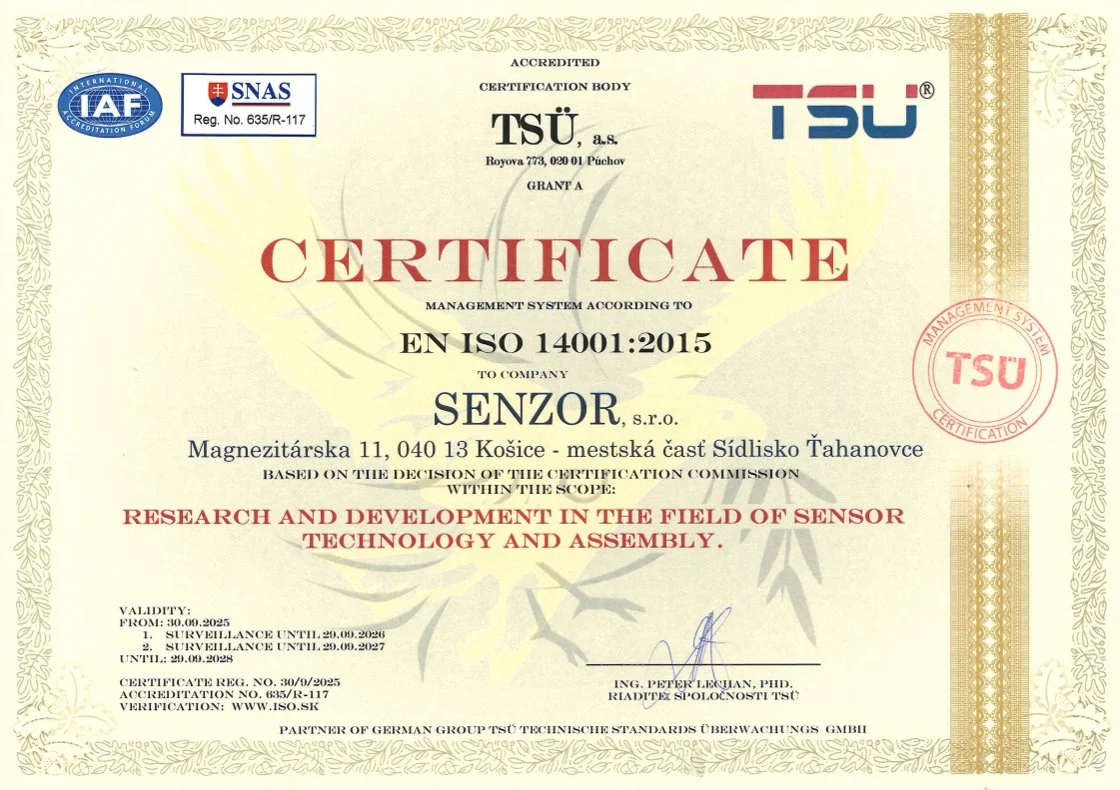
Certificates
of the Company
lorem ipsum dolor met sanit

Latest technologies and
optoelectronic precision

Long durability
of quality materials

Certified to
European standards

All our products are
manufactured in Slovakia


 info@senzor.sk